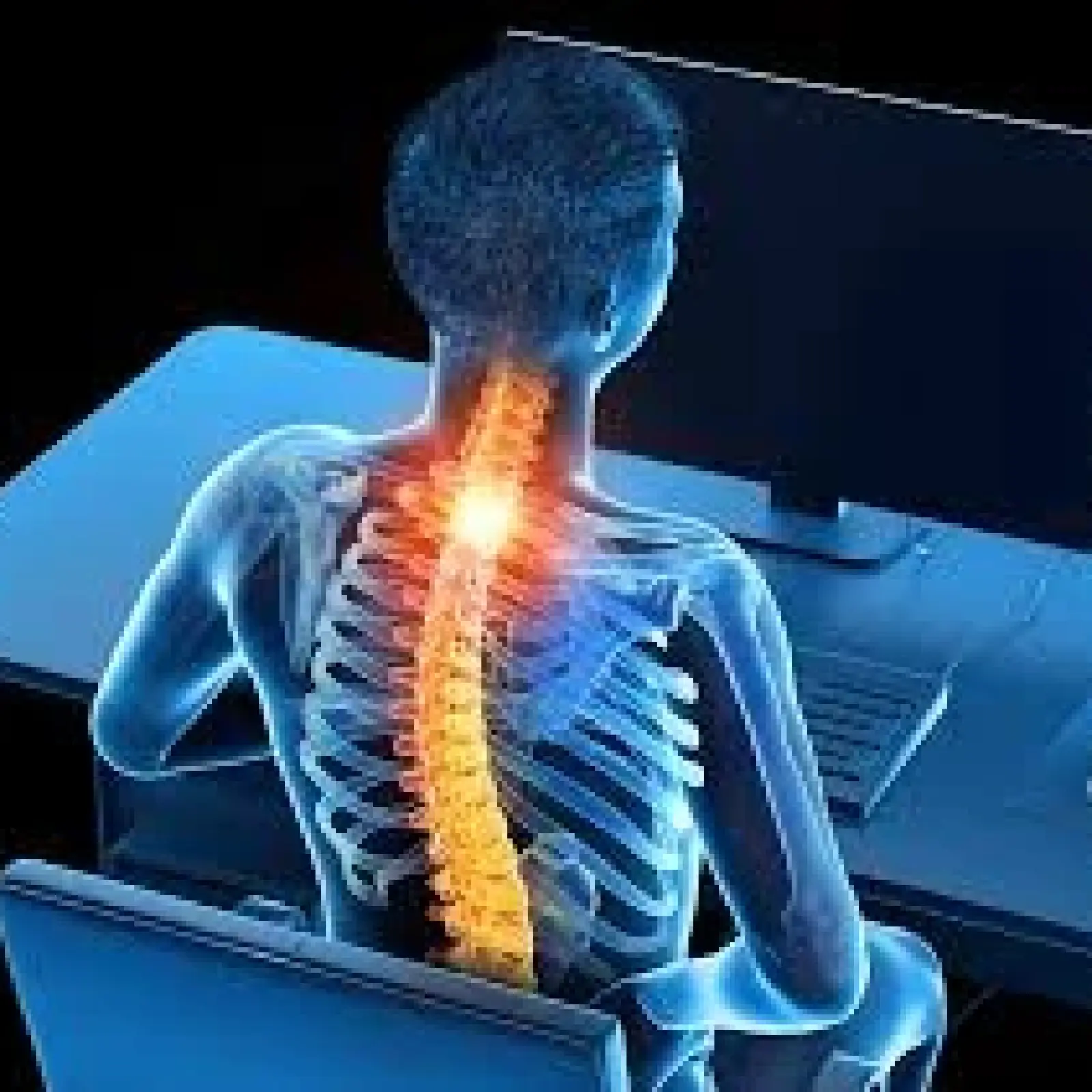

Correcting a sedentary lifestyle
Office work and work in IT involve long hours spent at a desk, which can lead to muscle imbalances, back pain and poor posture. In this article I will focus on recommendations for correcting these problems, and at the same time I will look at the specific muscle groups we should strengthen in the gym during the correction.
1. Problem: Shortened front hip muscles A sedentary lifestyle causes shortening of the front hip muscles, especially the iliopsoas (iliac and psoas muscle) and the rectus femoris (part of the quadriceps). This shortening leads to an anterior tilt of the pelvis, which increases the load on the lower back.
Correction: Let's focus on stretching the front hip muscles and strengthening the rear hip muscles, such as the gluteus maximus. Start by stretching the iliopsoas with lunges and standing hip flexor stretches. To strengthen the gluteus maximus I recommend squats, deadlifts and lunges.
2. Problem: Weak abdominal muscles Weak abdominal muscles, especially the transversus abdominis and the obliquus internus (internal oblique), provide reduced support for the lower back, which leads to back pain and poor posture.
Correction: To strengthen the abdominal muscles, include exercises such as the plank, side plank, leg raises and Russian twist. These exercises strengthen the deep abdominal muscles and improve trunk stability.
3. Problem: Weak and shortened upper back muscles. A sedentary lifestyle can cause weakness and shortening of the upper back muscles, such as the rhomboids, the trapezius and the latissimus dorsi. These muscles are responsible for proper posture, especially of the shoulders and shoulder blades.
- Correction: Strengthening and stretching these muscles is key to improving posture and reducing back pain. To strengthen the upper back I recommend exercises such as bent-over rows, face pulls, lat pulldowns and seated rows. To stretch these muscle groups try exercises such as the door frame stretch, child's pose and cat-cow stretch 4. Problem: Shortened chest muscles Prolonged sitting leads to shortening of the chest muscles, especially the pectoralis major and the pectoralis minor. Shortening of these muscles can lead to rounded shoulders and poor postureCorrection: Stretching the chest muscles is important for improving posture and preventing back pain. Exercises such as the doorway chest stretch, foam rolling the chest and yoga poses such as the sphinx pose or cobra pose will help release tension in these muscle groups. To strengthen the antagonist muscles, such as the rhomboids and trapezius, it is important to include the exercises we have already mentioned in the previous point.